Dark kitchen cabinets have a way of stopping people in their tracks. Charcoal, graphite, near-black: they look rich in photos and feel calm in person. They also come with a familiar worry. Will the kitchen feel small? Will it feel like a cave on a grey February afternoon?
It doesn’t have to. The difference between a dark kitchen that feels moody in a good way and one that just feels heavy comes down to a handful of decisions. Here’s how Westwood Senior Designer Kati Knorr handled them in a recent modern home, where nearly every cabinet is a deep charcoal and the room still feels bright and open.
1. Choose a Matte Finish With a Little Texture
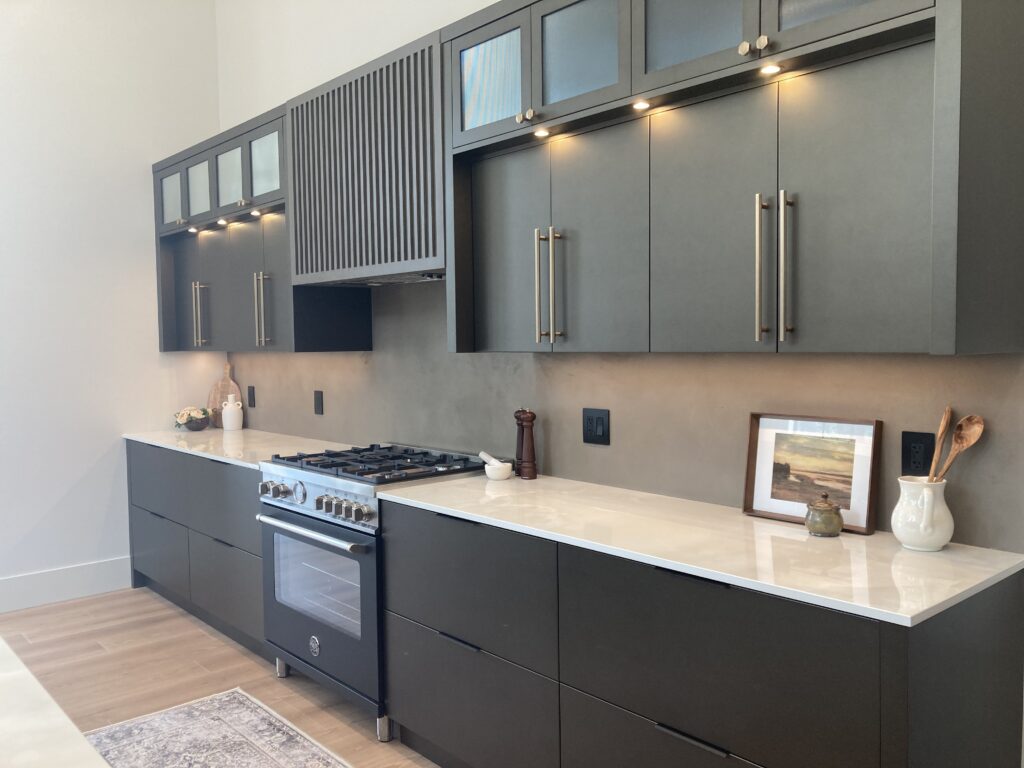
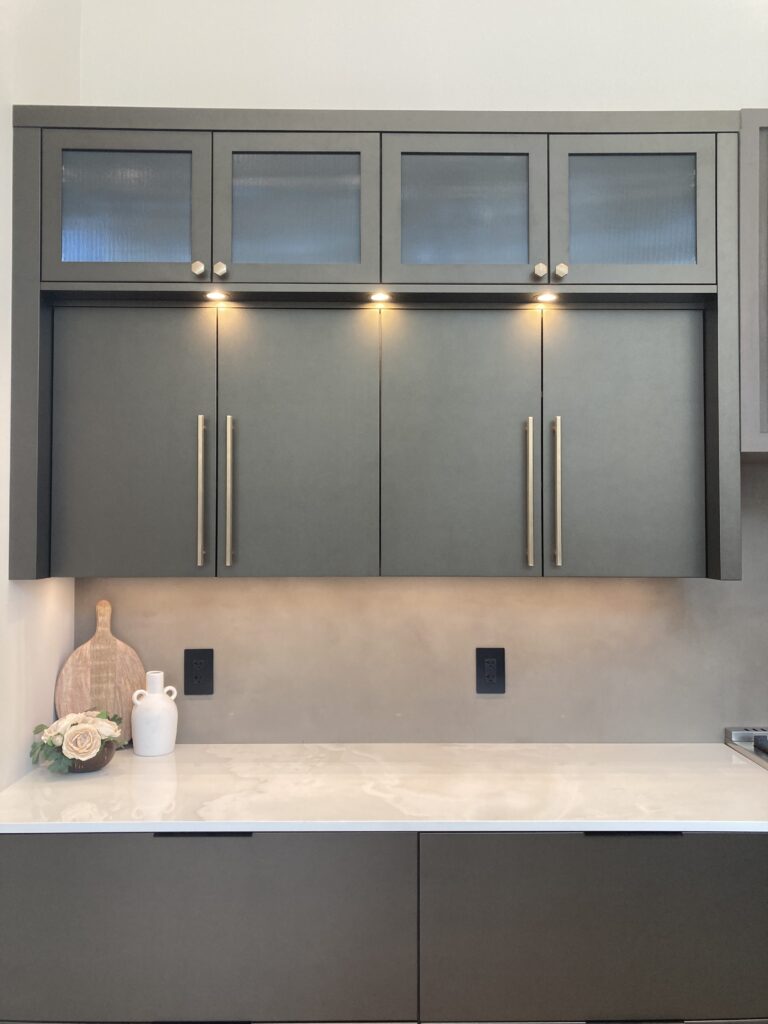
The cabinets in this kitchen are flat slab doors in a matte charcoal. Up close, the surface has a fine texture rather than a smooth sheen.
That matters more than it sounds. A glossy dark finish reflects everything around it and can look busy. A flat, matte surface absorbs light softly, so the cabinets read as one calm block of colour. A subtle texture adds depth and keeps a large run of dark doors from looking like a blank wall.
2. Add a Second Texture to Break It Up
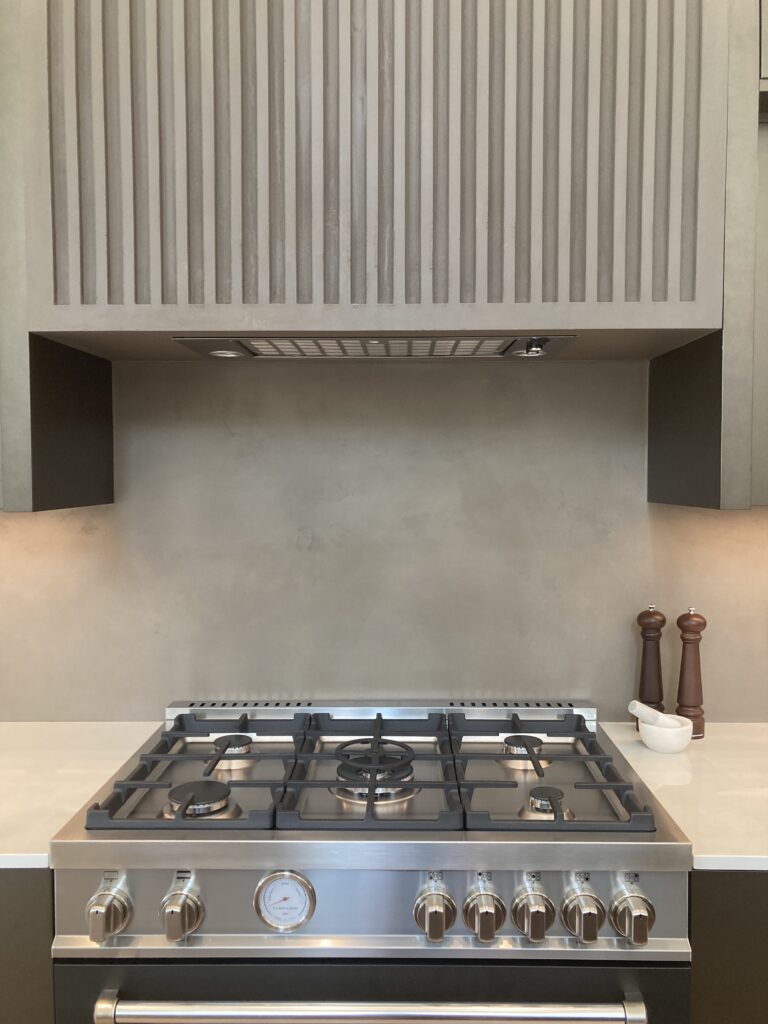
When every surface is the same colour, the eye needs something else to hold onto. Here, that’s vertical slats.
The range hood is wrapped in slats a shade lighter than the cabinets, so it stands out without fighting the room. The island repeats the idea in a darker tone, with vertical slats running along the seating side. Using one pattern in two places ties the kitchen together and gives it rhythm, even though the colour palette is tight.
3. Put Light Inside and Under the Cabinets
This is the single biggest factor in making dark cabinets work.
The upper cabinets have reeded glass doors with lights inside, so they glow softly in the evening. Puck lights under the uppers wash the backsplash and counter. And along the island, a strip of LED light is tucked under the counter overhang, which lights up the slats and makes the island look like it’s floating.
None of these lights are bright on their own. Together, they layer light at different heights, so the dark cabinets look warm instead of flat. If you’re planning a dark kitchen, plan the lighting at the same time as the cabinetry, not after.
4. Let the Fridge Wall Disappear
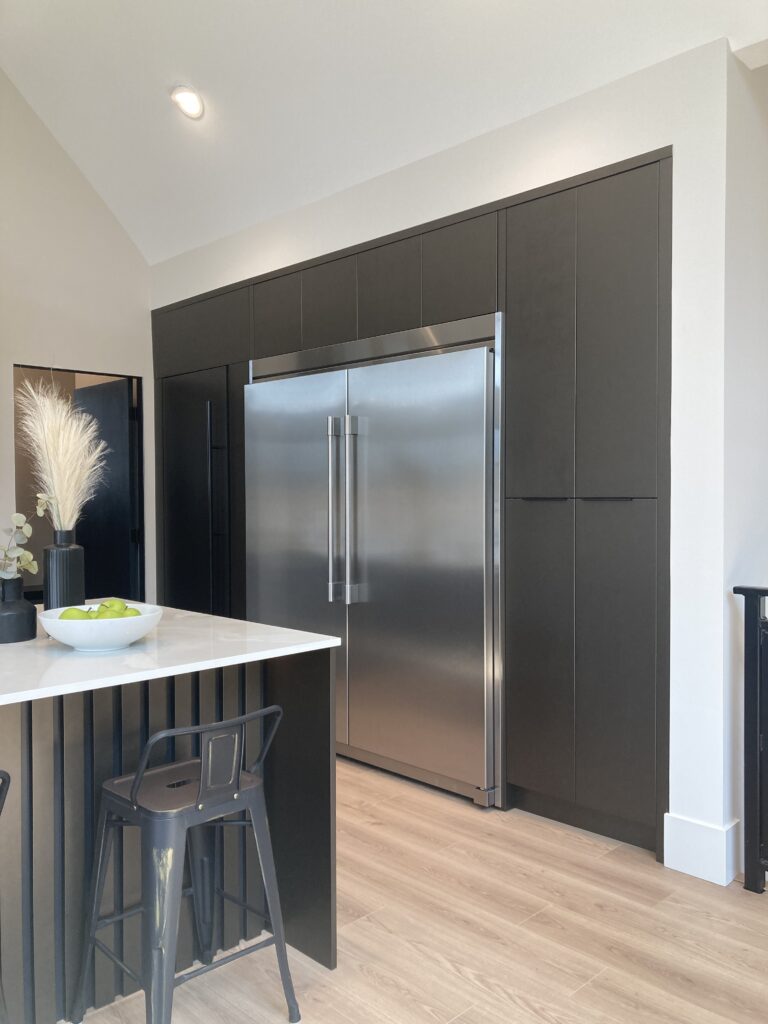
Big appliances can break up a dark kitchen with a lot of stainless steel. In this home, the fridge wall is built as one piece of full-height cabinetry. Two refrigerator columns sit inside a frame of matching charcoal panels, with a tall pantry cabinet beside them.
The tall pantry uses long vertical pulls that run most of the door height, and the panels line up with the cabinets around them. Close the doors and the whole wall reads as one clean block. Open one and you’ll find the pantry and a coffee and microwave nook tucked behind it, right next to the cold storage.
5. Keep the Surfaces Around It Light
Dark cabinets look their best when they have something light to push against. In this kitchen that means:
- White stone countertops on the island and perimeter
- Light oak floors
- A soft grey, concrete-look backsplash
- White walls and a vaulted ceiling
If your kitchen doesn’t get much natural light, keep the counters and floors as light as you can and let the cabinets be the main dark element.
6. Pick Hardware That Warms Things Up
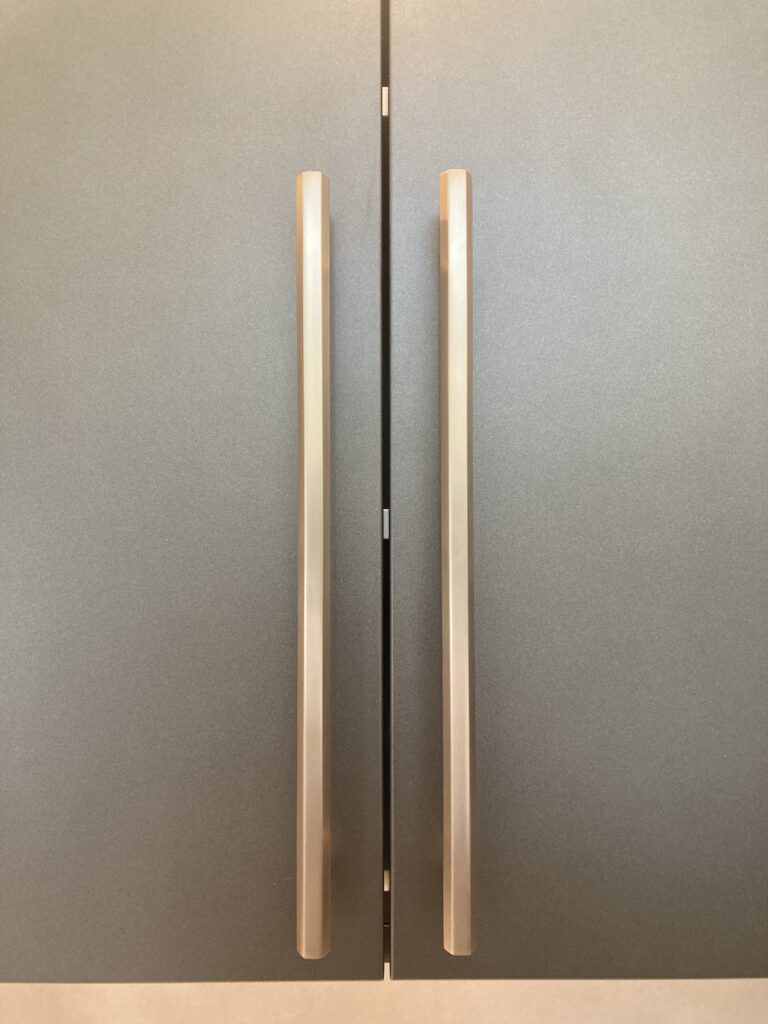
Black hardware on charcoal doors can disappear completely. Here, long bar pulls in a warm metallic finish add just enough contrast to catch the light. On the slab doors, slim edge pulls keep the lines clean where a full handle would feel like too much.
Warm metals like bronze, brass and champagne gold tend to pair best with charcoal. Cool chrome can work, but it pushes the room toward a colder look.
Designer Tip / Westwood Quality A dark kitchen is less forgiving than a white one. Every door gap, every panel joint and every reveal shows against a matte charcoal finish. That’s why the details in this kitchen were drawn so the slats on the hood and island line up, the glass uppers were planned around the lighting from the start, and the fridge wall keeps the same reveals from top to bottom. If you’re going dark, work with a designer who will sweat those lines with you.
Is a Dark Kitchen Right for You?
Dark cabinets are a great fit if:
- Your kitchen has good natural light, or you’re planning layered lighting
- You like a calm, modern look with fewer colours
- You’re happy to wipe down the cabinets now and then
If you love the idea but want something a little softer, navy is a good middle ground. See how we made a navy kitchen feel warm and inviting.