
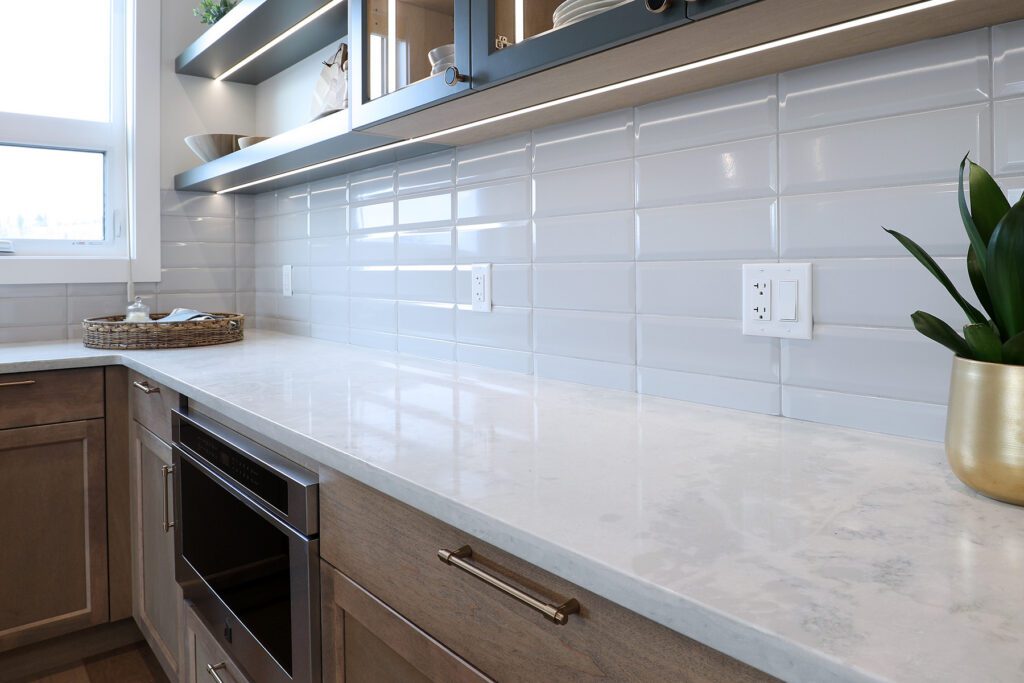
It’s 5 p.m. in November, it’s already dark, and you’re chopping onions in your own shadow. Most kitchens rely on ceiling lights, which sit behind you as you work at the counter. The result is a dim, shadowy work surface right where you need light most.
Under-cabinet lighting solves that, and it does more than help you see. It adds warmth, shows off your backsplash and makes the whole kitchen feel finished. Here’s how to plan it.
Why Under-Cabinet Lighting Matters
Good kitchen lighting comes in layers: overhead light for the room, task light for the work surfaces, and accent light for mood. Under-cabinet lighting is the task layer. It lights the counter directly, so cutting, measuring and reading recipes is easier and safer.
It’s also the light most people leave on in the evening. With the overheads off, it gives the kitchen a soft glow that feels calm instead of clinical.
Types of Under-Cabinet Lighting
LED strip lighting
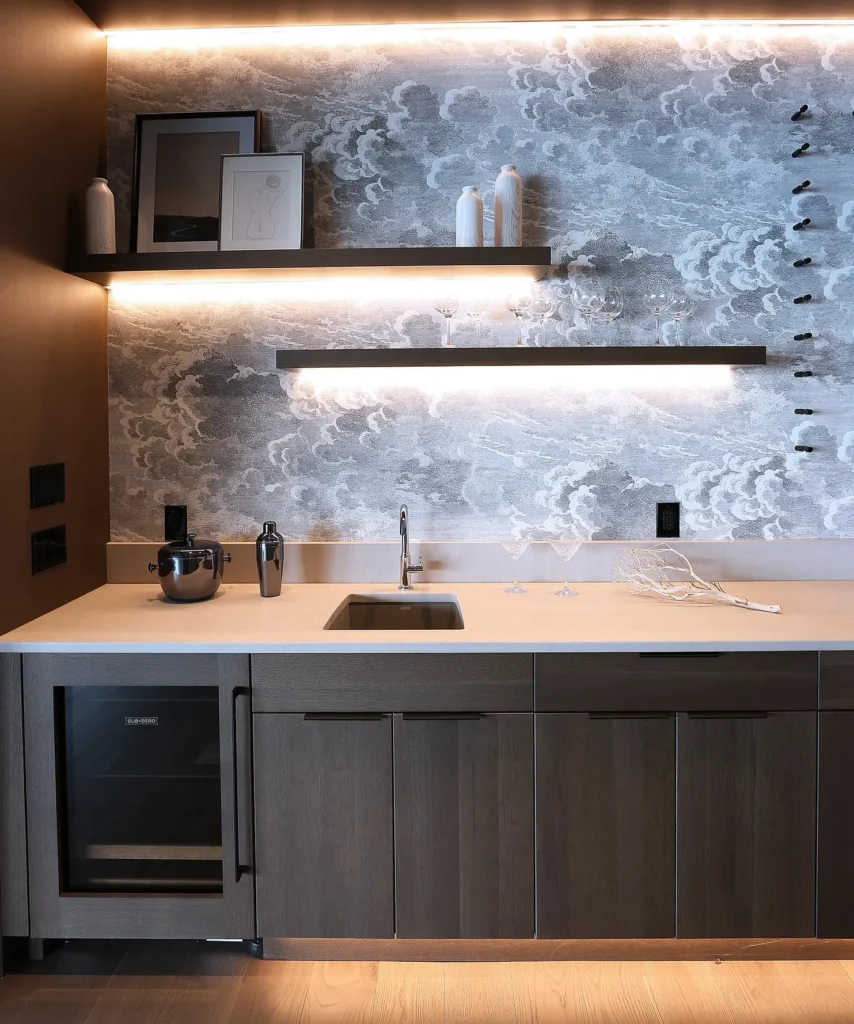
Thin LED strips give an even line of light with no spots or gaps. They’re the most popular choice for a clean, modern look. The Elegant Homburg Haven kitchen, uses strip lighting to highlight its floating shelves.
Puck lights
Small round lights create soft pools of light. They suit traditional kitchens and work well inside cabinets and under shelves. Shorerise by Dilworth Homes uses built-in puck lighting.
Light rails
A light rail is a small trim piece along the bottom of the upper cabinets. It hides the light fixtures from view when you’re sitting at the island.
Lighting Beyond the Counter
Under-cabinet lighting is just the start. Consider:
- Glass-front uppers: lighting inside shows off glassware and adds depth.
- Floating shelves: lights underneath make shelves look lighter and more intentional.
- Toe-kick lighting: a low glow along the floor works as a soft night light.
- Drawers and pantries: lights that switch on when you open a door make it easy to find things.
How to Get It Right
A few details make the difference between good and great under-cabinet lighting:
- Choose warm light. Warm white tends to feel more inviting in a home than cool, bluish light. Match the colour of all your kitchen lights so they don’t clash.
- Put lights near the front. Mounting lights toward the front edge of the upper cabinet lights the counter rather than the backsplash grout lines.
- Add dimmers. Bright for cooking, soft for evenings.
- Hide the wiring. Plan where the power supply and switches go so nothing shows.
- Think about glossy counters. Polished stone can reflect light points, so strips usually look better than pucks over a shiny surface.
Designer Tip: Plan your lighting at the design stage, not after install. Your electrician and your designer can coordinate wire routes, light rails and recesses so the lights sit flush and the wiring stays hidden inside the cabinetry.
Light Up Your Kitchen
The right lighting can make a kitchen feel brand new, especially in the dark months. Our designers will help you plan under-cabinet and in-cabinet lighting that works with your cabinets, your counters and your routine.
Visit our Kelowna showroom or book a free consultation to get started.


