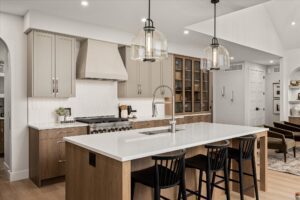
We usually think of cabinetry as the supporting cast. It holds the dishes, hides the mess and lets the tile take the spotlight. But a wall of built-in cubbies can do more for a room than any piece of art, especially when it’s designed as the feature instead of an afterthought.
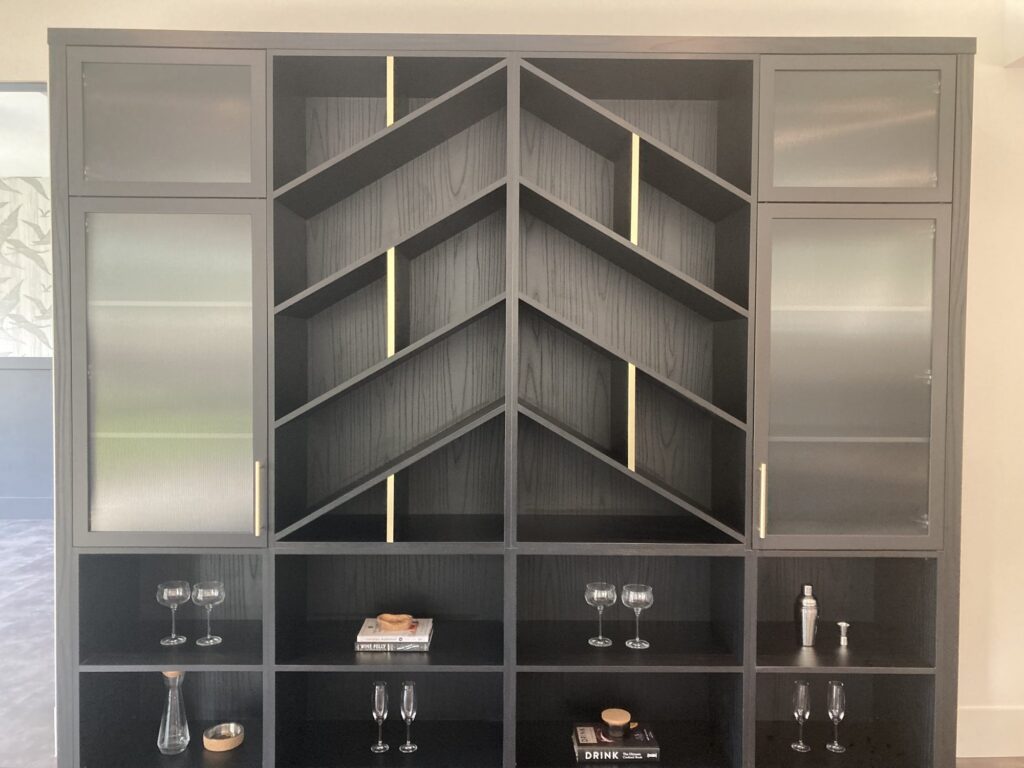
Westwood Senior Designer Kati Knorr turned a blank living room wall into a statement piece with chevron-patterned cubbies.
What Makes a Statement Wall
A statement wall uses cabinetry, shelving and pattern to turn a blank wall into the focal point of a room. It’s built in, made for that exact wall, and usually does a lot of storage work too.
The chevron cubbies are what set Kati’s design apart. Paired with dark wood, reeded glass doors and soft brass lighting, the pattern adds movement and craftsmanship without needing a loud colour.
Why Built-In Cubbies Work So Well
Cubbies are open storage with structure. Instead of one long shelf where things drift into piles, each item gets its own square. That makes built-in cubbies great for:
- Entries and mudrooms: one cubby per family member for bags, hats and shoes
- Kids’ spaces: bins for toys, so tidying takes five minutes
- Living rooms: books, baskets and display pieces
- Kitchens and coffee bars: mugs, cookbooks and glassware
Mix open cubbies with closed doors below and you get the best of both: display space at eye level and hidden storage for the less pretty things.
How to Design Built-In Cubbies That Feel Intentional
Start with what they need to hold
Measure the baskets, bins, books or boots that will live there. Cubby sizes should fit the things, not the other way around.
Think about proportion
A statement wall usually looks best running floor to ceiling or wall to wall. Half-height built-ins can look like furniture that wandered in.
Pick one star detail
Choose one standout, like a chevron pattern, a bold colour, a woodgrain change or integrated lighting, and let it carry the wall.
Light it
LED strips inside cubbies or along the top of a built-in make the whole wall glow at night and show off the craftsmanship.
Tie it to the rest of the house
Repeat a finish from the kitchen or a hardware style from the bathrooms so the built-in feels like part of the home, not an add-on.
Where Built-Ins Make the Most Impact
- The mudroom. Benches, hooks, cubbies and tall cabinets turn a chaotic entry into a calm drop zone. In a Harmony Homes build on Carmel Crescent, Westwood designer Anne Woods paired a natural wood bench and cubbies with tall cabinets and wall hooks for exactly that reason.
- The living room. Built-ins around a fireplace or TV hide cords and electronics and give the room a finished look.
- The home office. Shelving above, file drawers below and a desk that fits the wall exactly.
- The kitchen. A coffee or bar wall with open cubbies for glassware.
Designer Tip / Westwood Quality Statement walls rarely fit standard sizes. Walls aren’t perfectly square, ceilings vary, and the whole effect depends on the cubbies lining up evenly from end to end. Our Custom series builds every box for your exact wall, with 28 door profiles and custom paint and stain options, so the built-in matches the rest of your home and the spacing stays even across the whole wall.
Have a Blank Wall?
Bring us a photo and a measurement. Our designers can sketch a built-in that adds storage and gives the room a focal point. Visit our Kelowna showroom or book a free consultation to get started.